
 Posts


So I've been doing some reading on prices of Super Bowl ads. These two were the most interesting:
Super Bowl Ad Prices Drop
Stock Price Correlated to Likeability of Super Bowl Ads
So evidently, even the market for Super Bowl ads has been hit by the economic downturn. But why are prices this high anyways? According to the article, the average price for a 30 second ad during the Super Bowl is $2.5 million. The average price for non-Super Bowl ads is around $350,000. In other words, the price you pay for a Super Bowl ad is around 7.14 times what you pay for a normal TV ad.
Now let's consider the issue from a viewership standpoint. According to the above article, the expected viewership for today's Super Bowl is around 100 million people. Now, let's look at figures for something comparable. According to Nelsons Rating data for the week ending January 31st, the top viewed program was the "NFL 2010 AFC-NFC PRO BOWL," generating 12.3 million viewers (this is way above viewership for the State of the Union, by the way, which generated a paltry 5.7 million viewers). If we analyze the viewership data, we find that viewership for the Super Bowl is approximately 8.13 times that of a normal, highly watched football game.
An even more convincing relationship shows if we analyze the issue from the perspective of advertising dollars per viewer. From the Super Bowl data, the price would be around 2.5 cents per viewer. For the non-Super Bowl data, the price is around 2.8 cents per viewer.
Keeping in mind that some people (like me) watch the Super Bowl purely for the commercials, and it's safe to say that buying 30 seconds on the Super Bowl can even be a good deal. Rather than being overpriced, the price of 30 seconds for a Super Bowl ad is pretty much the same if we consider it from a per viewer basis instead of a per time basis.
The second article is really just a reminder that investment ideas come from the strangest places. If you see any great commercials, don't forget about the company behind the commercials (I will personally be keeping an eye on Godaddy.com).
It just goes to show that economics can be found everywhere.


Merle Hazard (HAHA GET IT???) at the AEA Humor Session
Friday, February 5, 2010
I'll let you draw your own conclusions from this one...
Jodi Beggs at the AEA Humor Session
I've been looking for some videos of the AEA Humor Session (a whole session of economics humor? Yes please). This is what I've found so far, but I'll post more as I find it.
For the unaware, Jodi Beggs is the Harvard trained economist who is in charge of the "Economists Do It With Models" blog. You can access her blog from the left hand "quick links" bar. She also has video lectures online for introductory economics. If you're in an econ class right now and need some quick resources, go on youtube and look up "jodiecongirl"
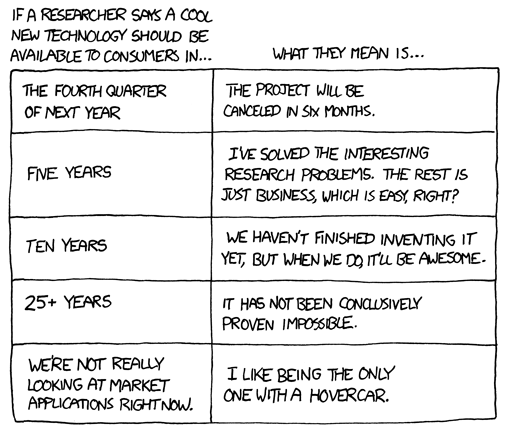
The videos I found quite entertaining, if you're into this kind of humor. And yes, she uses a comic from xkcd in the third video, which completely made my day.
How Much Money Does a Buffet Make?
Tuesday, February 2, 2010
I was talking with my friend the other day and we got into a discussion about buffets (yeah, like the restaurant). Supposedly, a local buffet had raised its prices to $15 per person. I remembered going to that same restaurant few years ago, when prices were only around $10 per person. I'm sure there has been inflation since then, but a 50% increase in prices is a bit drastic.
I thought about the issue a bit after I went home. There were many possibilities to the mysterious price increase: increases in the quality or quantity of food, improvements in the quality of service, or even renovation that improved the general atmosphere of the restaurant. All of these were (and still are) legitimate possibilities. I haven't been to the said restaurant in a few years, so I don't really know if these factors have changed. This, therefore, adds some significant confounding variables to this analysis, which makes my idea somewhat akin to pure speculation (aka don't use it for your next research paper).
Still, the idea makes sense both from a logical and economic standpoint.
My idea is that buffets suffer from the problem of adverse selection. The concept is not that difficult to grasp. Taking into account the fact that buffets charge by person and not by item (the very definition of a buffet) and the fact that people have varying food consumption capacities, the problem immediately becomes clear. Assume that the current price for a given buffet is $6. If I can eat $10 worth of food and my friend can only eat $3 worth of food, going to the buffet is then a very bad deal for my friend (a loss of $3). I, however, am getting a net benefit of $4 from going to the buffet. The logical solution is for my friend to stop going to buffets.
This presents a problem for the buffet restaurant. Because it sets its price based on the price it takes to feed the average customer, a decrease in the number of people who don't eat very much will shift this average higher. If the average customer eats more, then the firm must increase its price to keep profits. But if it increases prices, people who originally benefited from the lower price would drop out of the market! (If the price went from $6 to $7, people who benefited at $6.50 would stop going to buffets).
This is probably why buffets charge different prices for children and adults, in an attempt to price discriminate. This is probably why buffets make overly greasy food and give you giant glasses of water that constantly get refilled. This is probably why McDonald's heats their coffee to super-high temperatures so that the customer never has a chance to refill. This is also probably why movie theaters only allow for refills with the largest sized popcorn. The bottom line is, the less you eat, the more these firms make.
But in the end, how much does a buffet make? The answer is as ambiguous as that of any two armed economist: It depends. If the firm is smart enough to take the price discriminatory and profit generating measures necessary, the answer is probably a decent sum. If it goes into the market with a complete blind eye to the issue of adverse selection, the results might be more humbling (which might explain why two or three Chinese buffets have failed in our area in the past few years).
So the next time you're at a buffet stuffing yourself full and wondering why prices are so high, just tell yourself to eat less. Get everyone to do it, and prices are sure to fall. You can afford to eat a bit less. That food isn't good for you anyways.
A Familiar Econ Rap
Friday, January 29, 2010
I remember a few weeks ago Mr. Devine showed us a video of an econ rap in the making between Keynes and Hayek. Well, here's the final released video. Very cool :) (yes, I realize that "cool" is a subjective term)
A Reflection on Obama's State of the Union
At this point, there should be no doubt that Obama is a great speaker. There should also no doubt that Obama is a smart man, an academic whose reputation does not end with the colleges that he attended. But as with all academics, Obama dwells too much in the theoretical world and not enough in the pragmatic world. The idea was nagging me as he got elected, and that idea has been reaffirmed with Obama's State of the Union Address.
There is no doubt in my mind that what Obama is trying to do is the right thing to do. Healthcare reform, clean energy incentives, education tax credits, infrastructure spending; all are necessary for building the economy of tomorrow. Many of these measures, like his call for a carbon credit market, even make economic sense. However, trying to make all of these things happen at the same time is not only bad politics, it's bad common sense.
Allow me to list the proposals the President made in his address:
If this list seems imposing, that is because it is. Political analysis is not telling me this, common sense is. At at time when the country is facing massive deficits, at a time when confidence in the government is at an all time low, prioritization is key.
It doesn't matter what the President wants done, or even what the country needs done. The cold truth is that at a time of chaos like the present, a very small percentage of the measures proposed by the President will get passed.
Indeed, everything is best in moderation.
There is no doubt in my mind that what Obama is trying to do is the right thing to do. Healthcare reform, clean energy incentives, education tax credits, infrastructure spending; all are necessary for building the economy of tomorrow. Many of these measures, like his call for a carbon credit market, even make economic sense. However, trying to make all of these things happen at the same time is not only bad politics, it's bad common sense.
Allow me to list the proposals the President made in his address:
- $30 billion of repaid TARP money to help community banks and other small banks
- Small business tax credit that will go to over one million small businesses who hire new workers or raise wages
- Elimination of all capital gains taxes on small business investment and a tax incentive for businesses to invest in new plants and equipment
- Rebates to Americans who make their homes more energy-efficient (Cash for Caulkers)
- End of tax breaks for companies that ship our jobs overseas and increase tax breaks for companies that encourage domestic growth (protectionism?)
- Financial reform bill
- Comprehensive energy bill that includes production of more clean nuclear plants, investment in advanced biofuels and clean coal technologies, and a carbon credit market
- National Export Initiative to double exports in the next 5 years
- A bill to provide more money to community colleges
- Comprehensive education bill that includes a $10,000 tax credit for four years of college education
- Passage of healthcare bill
- Freeze on discretionary government spending in 2011
- Bipartisan fiscal commission to enforce fiscal discipline
- Lobbyist reform bill
- Earmark reform bill
- Repeal "don't ask don't tell"
If this list seems imposing, that is because it is. Political analysis is not telling me this, common sense is. At at time when the country is facing massive deficits, at a time when confidence in the government is at an all time low, prioritization is key.
It doesn't matter what the President wants done, or even what the country needs done. The cold truth is that at a time of chaos like the present, a very small percentage of the measures proposed by the President will get passed.
Indeed, everything is best in moderation.
Why China will Not Rule the World
Wednesday, January 20, 2010
The scene strangely resembles an episode of South Park. Cartman thinks that the Chinese are planning to take over the world and goes into a Chinese restaurant to gather some intel about the upcoming Chinese invasion. When he doesn't hear what he wants to hear (the Chinese were never planning an invasion, even in the twisted world of South Park), Cartman goes on a shooting rampage and then gets himself arrested.
The real life situation is almost a mirror image of that episode of South Park, in a contrived, symbolic sort of way. All over the country, people are clamoring that China will be the world's next superpower, especially economically. Political domination, as it follows, will then be just a step away. And just like South Park, I'm here to tell you that it is all a hoax. There will be no economic or political domination. Improvement? Perhaps. But even if China has the resources and the capacity to become the world's leader, it lacks the willpower for change to realize this dream. Because though China's improving economically, such economic gains can only mask the political sins its leaders have committed.
Before we continue, keep in mind that I'm not some WASP America-Lover. I am saying all of this from the standpoint of a Chinese citizen, someone who has deep respect for his homeland (albeit one that has been able to see what I believe to be the truth about that homeland). However, certain facts must be addressed and grievances made clear. The only way to improve, as it turns out, is to acknowledge one's shortcomings.
The main issue, of course, is China's political system, something that I could write about for pages and pages but will attempt to condense into a few paragraphs. In short, political instability and corruption is in China's blood. The fact that never in China's 5,000 years of existence has it ever had a democratic political system is a telling fact. Taiwan was a ray of hope in China's political history, but unfortunately, managing a tiny island is a lot easier than managing the third largest nation in the world. And that's assuming that the current government is willing to change.
Judging by history, the odds don't bode well. Throughout China's history, the vessel for political change has almost exclusively been revolution. Very rarely have there been peaceful transitions in power. But the more important consequence of history is the mindset of the ruling party that their will is law, that their word is supreme, and that their power can be taken only through revolution (in this regard, the odds are even worse, as the current Chinese military is one of the strongest in the world).
In other words, China's established government, along with its problems and inefficiencies, is here to stay. What are the economic implications of this fact?
First is the supression of information. Free markets thrive on the free flow of information. In most studies of economics, perfect information is a necessity, and often taken for granted. Unfortunatly, without perfect information, complications arise. Robbing the population of an accurate assessment of value, consumers and investors alike begin to speculate. The fact holds at all levels China's economy. Without regulatory agencies and free information about product safety, consumers buy faulty products and unsanitary foods. In September of 2008 a strain of toxic milk was found in China that caused sickness in over 6,000 infants. Such is not an isolated incident. America has certainly learned this lesson the hard way, after receiving toys from China that contained higher-than-safe levels of lead. In China's real estate market, speculation runs rampant. Houses lay dormant, bought purely for the purpose of a speculative investment. The scene in China's real estate market strangely resembles that of the United States before our "Great Recession" and have some experts clamoring over an asset bubble in China. In China's stock market, the lack of information causes minute pieces of information to swing markets in large amounts. Many companies lack statistics and as a result stock market investing in China resembles gambling more than investing.
But bah, you say. Perhaps China will change. Certainly it is impossible to suppress information in our age, where information technology and the use of the internet reigns supreme. I have more than once held on to this thread of hope. And perhaps that interpretation has some validity. However, if Google's conflict with the Chinese government is any indication, China plans on suppressing information for as long as it possibly can. If, somehow, China's stance on censorship does crumble under the political pressures of the interational community, it will a) not be anytime soon and b) be accompanied by a fundamental shift in the role of the Chinese government.
Perhaps another staple of the disfunctional government, China's government is also highly corrupt, which invariably leads to economic inefficiency. Throughout history, its legal system has never been one based on law, but one based on the jurisdiction of those in power. As such, buying of favors, exploitation of the poor, and the institution of lavish programs that benefit only the most wealthy are all uncomfortably common in China.
In just the past few years, local governments across China have been building new houses. A noble enough goal, except for the fact that nobody lives in them. The only reason they were built was to reach China's predicted GDP growth figures. Economically inefficient? You bet.
China's ownership of intellectual property is also hugely limited. Piracy runs rampant (moreso that in Europe or the Americas) and patents and intellectual rights are almost unheard of (you've probably seen the reports of pirated DVDs and fake Rolex watches). The meager laws that do exist can be easily bypassed with a bribe. This, of course, disincentivises research and development and as a result stunts China's growth potentials.
Finally, China's economic relations with the rest of the world has not been quite clean as well. By artificially pegging its currency to the US dollar, the Chinese government has been able to maintain positive net exports. In a way, China has is really the world's spoiled child. Given what it wants to avoid its tantrum, the western world has pacified China by meeting most of its ridiculous desires. But sooner or later, the tides will turn. Sooner or later, the rest of the world will get annoyed by China's incessant whining. Sooner or later, even the most lenient parents will choose discipline. When that happens, China's currency will undoubtedly appreciate, and China's edge in manufacturing will wane. Without business from abroad, the shakey fundamentals of the real Chinese economy will show. And when that day comes, it will be a sad day for China indeed.
But maybe China has come a long way since its communist days. Maybe attempting to mix a capitalistic economic structure with a communistic political structure is a noble move. But as Milton Friedman said in Captialism and Freedom, "There is an intimate connection between economics and politics." It is also possible the demands of 2010 are hugely different than the demands of 1980. Ultimately though, everything all boils down to a single fact: the Chinese economy still lacks the fundamental infrastructure necessary for a sustainable and functional growth.
After all, a house without foundations cannot stand.
The Fed's Warning Signal for Rate Hikes
Sunday, January 10, 2010
If you're as interested in zzz-inducing articles as I am, you'll love this new press release by the Fed: ADVISORY ON INTEREST RATE RISK MANAGEMENT. I hope you enjoy it as much as I did.
If, however, by the off chance that you're not interested in reading eleven pages on the management of interest rate risk (IRR, as the pros call it), I'll kindly sum up the report in a single sentence for you: "Hey banks, don't get too comfortable in this low interest rate environment."
All at a time when worries of inflation are soaring and when the economy is finally stabilizing in a sustained recovery. What does this all mean? The answer is clear: the possibility of higher interest rates.
In my opinion, the move was a smart one, albeit a coy one. Everyone knows that interest rates will rise sooner or later (it's impossible for the rate to sink lower, with the rate currently held at 0-1/4% for what the Fed forecasted would be an "extended period."). But the question of when has led to much doubt, and probably as a result, much speculation. But note that conspicuously missing from this press release is any mention about the time frame of a possible rate hike (in fact, there's no mention of raising interest rates at all, though the message is pretty clear).
This is not a mistake. Up until this point, the Fed has been in a catch-22 situation with half of the business world clamoring about inflation and the other half of the business world worrying about a double-dip recession. With this press release, the Fed is attempting to ease the minds of both groups, not an easy feat. For the inflation hawks, the press release sends a clear message to to them that interest rates will rise eventually, and reassures them that the Fed does indeed know what they are doing. For the double-dippers, the press release provides ambiguity, promising the eventual rise of interest rates (which we knew would happen sooner or later) but not specifying a time frame.
In other words, the press release is intended to be a much needed confidence boost, nothing more. I don't think that the Fed actually plans on altering its original course of keeping interest rates at 0-1/4% for an extended period, especially since the majority of the ARRA money is planned for FY10, which will significantly crowd out public consumption. Even if the Fed does indeed raise interest rates, I predict that the rate hikes will be very minimal (somewhere around 25 basis points) and only for the purposes of boosting confidence in the economy and keeping inflation expectations in check. I doubt that the Fed will take inflation seriously until either a) inflation gets out of hand, or b) until the economy is more or less functioning normally again.
For those of you who doubt me still, understand that I have been keeping up with the latest from the Fed. Even as the Fed establishes the Term Loan Facility for the eventual rise of interest rates, even as the Fed sets a time frame for the end of quantitative easing, even as the Fed is at a point where it could theoretically raise interest rates without having a significant effect on banks' lending practices (due to the large amount of excess reserves banks are holding), I am still not convinced that the Fed is willing to take serious (think Paul Volker) measures to curb inflation.
So in the end, all this press release does is buy time. At least that's my take. But is that such a bad thing? I don't think so. The Fed doesn't disagree. The truth is that the current economy is unpredictable. A year from now, we will be in a much better position to evaluate the direction of our nation and the necessary policies to guide it. You know what they say: "Time is money."
Subscribe to:
Posts (Atom)